Our Blog

Oral Cancer Facts and Figures

September 20th, 2023
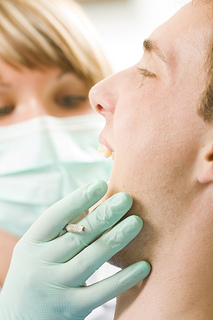
Oral cancer is largely viewed as a disease that affects those over the age of 40, but it can affect all ages, even non-tobacco and alcohol users. Oral cancer can occur on the lips, gums, tongue, inside lining of the cheeks, roof of the mouth, and the floor of the mouth. Our team at hartstone dental recently put together some facts and figures to illustrate the importance of visiting our Middleton, WI office.

Our friends at the American Cancer Society recommend an oral cancer screening exam every three years for people over the age of 20 and annually for those over age 40. Because early detection can improve the chance of successful treatment, be sure to ask Dr. Joel Hartjes and Dr. Jon Szewczyk and our team to conduct an oral exam during your next visit to our Middleton, WI office.

  • Symptoms of oral cancer may include a sore in the throat or mouth that bleeds easily and does not heal, a red or white patch that persists, a lump or thickening, ear pain, a neck mass, or coughing up blood. Difficulties in chewing, swallowing, or moving the tongue or jaws are often late symptoms.
  • The primary risk factors for oral cancer in American men and women are tobacco (including smokeless tobacco) and alcohol use. Risk rises dramatically (30%) for people who both smoke and consume alcohol regularly.
  • Oral cancers are part of a group of cancers commonly referred to as head and neck cancers, and of all head and neck cancers they comprise about 85% of that category.
  • Oral cancer is the sixth most common cancer among men.
  • Oral cancer is more likely to affect people over 40 years of age, though an increasing number of young people are developing the condition.
  • Death rates have been decreasing over the past three decades; from 2004 to 2008, rates decreased by 1.2% per year in men and by 2.2% per year in women, according to the American Cancer Society.
  • About 75% to 80% of people with oral cavity and pharynx cancer consume alcohol.
  • The risk of developing oral cavity and pharynx cancers increases both with the amount as well as the length of time tobacco and alcohol products are used.
  • For all stages combined, about 84% of people with oral cancer survive one year after diagnosis. The five- and ten-year relative survival rates are 61% and 50%, respectively.
  • It is estimated that approximately $3.2 billion is spent in the United States annually on treatment of head and neck cancers.

Cancer can affect any part of the oral cavity, including the lip, tongue, mouth, and throat. Through visual inspection, Dr. Joel Hartjes and Dr. Jon Szewczyk and our team at hartstone dental can often detect premalignant abnormalities and cancer at an early stage, when treatment is both less extensive and more successful.

Please let us now if you have any questions about your oral health either during your next scheduled appointment, by giving us a call or asking us on Facebook.


Periodontal Disease Associated with Cardiovascular Risk

September 13th, 2023

We all know that brushing your teeth and flossing regularly keeps your smile sparkly and bright, but did you realize that cleaning your teeth can actually help your heart? Recent research suggests that people with periodontal disease also have a higher cardiovascular risk, which means they are more vulnerable to heart attacks or stroke. It’s probably not time to throw away those running shoes in favor of a new toothbrush, but this is an added incentive to maintain good oral hygiene.

Relationship between Periodontal Disease and Cardiovascular Health

In 2003, researchers from the University of Buffalo conducted analyses which suggested that patients with gum disease were also at elevated risk of cardiovascular problems. Furthermore, people with more severe cases of gum disease have even poorer heart health. Although the exact causes of this relationship remain unknown, scientists continue to explore the impact of oral hygiene on broader health.

One hypothesis is that poor oral hygiene leads to inflammation, which negatively affects the heart. Gum disease occurs when bacteria build up in the mouth, and feed off sugars found in food. These bacteria release compounds that contribute to inflammation and red, swollen gums. The same inflammatory compounds may affect the heart, increasing overall cardiovascular risk.

Protect Your Teeth, Protect Your Heart

Taking a few commonsense measures can go a long way to improving your oral health and your cardiovascular risk. Consider the following:

  • Brush twice daily, and floss at least once per day. Brushing your teeth at least twice a day cleans away the harmful bacteria that contribute to gum disease. Similarly, flossing your teeth ensures that dangerous bacteria that build up between each tooth get swept away. These simple steps are the easiest ways to reduce your risk of periodontal disease.
  • Eat healthy foods. Those sugary snacks that you love so much don’t help your teeth. Whenever possible, stick to a healthy diet of fruits, vegetables, and whole-grain foods. For example, grab an apple or a few celery sticks for a mid-afternoon snack, rather than indulging in that candy bar.
  • Drink water. Staying hydrated doesn’t just help your body – it also swishes bad bacteria away from your tooth and gum surface. Drinking plenty of water improves your overall oral health. It’s particularly helpful after eating a sugary or sticky snack, because water can reduce plaque buildup.
  • Visit hartstone dental. Dr. Joel Hartjes and Dr. Jon Szewczyk and our staff will monitor your mouth for signs of periodontal disease and can make specific recommendations to keep your mouth – and your heart – safer.

What exactly is a root canal?

September 13th, 2023

Hearing that you need a root canal can be highly intimidating. What is a root canal? It is the removal of the nerve supply from the tooth. Here, Dr. Joel Hartjes and Dr. Jon Szewczyk will describe the parts of a tooth and explain the reasons for a root canal and how it is done when you visit us in our Middleton, WI office.

Your tooth is made up of many layers. The outside layer is called enamel and is made of minerals. The middle layer is dentin, which is also a calcified tissue, but less dense. The center of the tooth is called the pulp, and that hosts the nerves and blood vessels. A root canal is the removal and replacement of this center with a sterile filling.

A root canal is needed when an infection spreads to the center of the tooth. This can be from trauma (recent or previous), a cavity, a severe crack, or other compromise that causes nerve damage. An X-ray and examination are required to see if a root canal is needed. Symptoms may include but are not limited to pain, swelling, change in tooth color, and over-reaction to temperature change or pressure.

When it is time to begin, you’ll receive local anesthesia (via injection) to make you most comfortable. A rubber dam is used to isolate the tooth, while other equipment determines the nerve location and maintains a sterile working environment. All of the infected area is removed including the nerve tissue and blood vessels. Then, medicines are used to sterilize and alleviate any pain. Next is the placement of a filling material in the spot where the nerve used to be.

When your nerve and blood supply are taken away, the tooth is non-vital, or dead, and can become weak and fragile. If your tooth is badly decayed, a large portion of it will have to be removed. It is recommended to place a crown on the tooth to keep the enamel from breaking or falling apart. If you do not get a crown, you could eventually lose the tooth to more decay or infection. The tooth could also break off completely and you would have to have an extraction. The crown fits over the top of the tooth and secures it from breaking down.

A root canal saves the life of a tooth that would otherwise succumb to further infection and eventually extraction. Infection is the cause of most-needed root canals. If you are ever unsure what is happening at your appointment, don’t be afraid to ask questions so you understand the procedure completely.

Keep Those Teeth Shipshape, Matey!

September 7th, 2023

September 19th is just around the corner, and you know what that means—Aye, matey, it’s “Talk Like a Pirate Day”! Why do we have a “Talk Like a Pirate Day” and not a “Take Care of Your Teeth Like a Pirate Day”? You don’t need a treasure map to find the answers!

  • High Seas Hygiene

The toothbrush as we know it, with easy to clean nylon bristles, was invented less than 100 years ago. Even toothbrushes with animal bristles weren’t easily available until a century after pirates sailed the seas. If pirates brushed at all, they probably used rags or twigs with frayed ends to clean their teeth. And rags and twigs just can’t take care of plaque the way careful brushing and flossing can.

Two minutes brushing in the morning and two minutes at night, with careful flossing each day, will help keep your teeth as white as a chest of pearls—and healthy to boot!

  • Dastardly Diet

Pirates were a scurvy lot—literally. Scurvy is a disease caused by a lack of vitamin C, a vitamin found in fresh fruits and vegetables. One of the many unpleasant symptoms of scurvy is bleeding, swollen gums. As you can imagine, months at sea on a pirate ship provided very few chances for fresh fruit and vegetables. As a result, sailors often had to live with gum pain and even tooth loss from serious gum disease.

We now know that eating a healthy diet is a key to oral health. In fact, it was a British naval doctor who discovered that bringing oranges, lemons, and limes aboard sailing vessels prevented scurvy—but sadly for our pirate crew, this discovery happened several decades after the Golden Age of Piracy. Fortunately, you have access to a bounty of fresh fruit and vegetables. Eat a diet rich in vitamins and minerals, and your teeth and gums will be all the better for it.

It’s not looking too good for our pirate crew, but let’s look on the bright side—even if a pirate did get a cavity or suffer gum disease, he could always see the ship’s dentist, couldn’t he?

  • Ship’s Dentist—Arrrr You Kidding?

If a pirate had a bad cavity, his best treatment option would probably be to ask a fellow pirate to pull the tooth. If a pirate needed a root canal, his best treatment option would probably be to ask a fellow pirate to pull the tooth. If a pirate had a cracked tooth, his best… well, you get the picture.

Luckily, it’s a different world today. Now we have dentists with years of education and training, modern tools and equipment, and the very best medical knowledge to treat all of our dental problems, big and small. See your dentist at least twice a year for exams and cleanings, and you will reap the bountiful rewards of regular, professional, proactive care.

Being a pirate for a day is fun. We all enjoy tales of a good treasure hunt. But you already have a treasure that most pirates could never hope to have—healthy teeth and healthy gums! And with proper care, this treasure can last a lifetime. Until next September 19th, fair winds and good checkups at our Middleton, WI office be yours, matey!

1001 N Gammon Rd #2
Middleton, WI 53562
(608) 836-5600