June 1st, 2017

With the warmer and longer days here, we know many of our patients at Hartjes Dental Associates will be much more active in the summer. Though most of our patients are probably already ready to hit the field for some summer fun, we thought we would discuss a few precautions to take when it comes to keeping your teeth safe as you enjoy playing your favorite sports.
Use a Mouthguard
Are your kids participating in contact sports this summer? If the answer is yes, we strongly encourage you to have them fitted for a mouthguard at Hartjes Dental Associates before the season starts. Athletes can avoid serious mouth and jaw injuries by using a mouthguard.
Be Mindful of Sports Drinks
While sports drinks can be refreshing after a game, they unfortunately contain high levels of sugar and citric acid, which are known to erode the teeth and reduce the minerals in the outer tooth enamel. The simplest way to prevent sports drinks from damaging your teeth? Avoid them completely and drink water instead. Water is a great option to keep you hydrated before, during, or after a game.
Floss, Floss, Floss
While we always tell our patients about the importance of flossing, it is especially important on the day of the game. Athletes are likely to consume more sugar; from energy bars and chews to gum, you are not doing your teeth any favors. All that sugar may give you that extra bounce in your step when out on the field, but we want you to remember to floss when you get home, or else contend with an increased risk of cavities down the road.
If you have any questions about keeping your teeth and mouth healthy while participating in summer sports, please give us a call at our Middleton, WI office! Have fun!
May 25th, 2017

Memorial Day is not only a federal holiday in the United States, but it is a day of observance and remembrance of those who died in service. Originally known as Decoration Day, this solemn day has been marked on calendars since the end of the American Civil War as a day to commemorate both the Confederate and Union soldiers who fought and died in the war.
Marking the graves of fallen soldiers with flowers, wreaths, or other tokens has been practiced throughout history, but it wasn't until the mark of the end of the Civil War that a special day was decided upon as the one to spend in remembrance. By 1890, every state in the country was observing Decoration Day. It wasn't until 1967 when the name formally changed from Decoration Day to Memorial Day, in order to encompass all fallen American soldiers in all wars and conflicts. In June of 1968, Congress moved the official date of Memorial Day to the last Monday in May in order to create a three day weekend.
Today, while there is certainly an air of remembrance on Memorial Day, it has become more a day of spending time with family, friends, and other loved ones. This day is also heralded as the start of summer, with many schools finishing for the year around this time. Our team at Hartjes Dental Associates remembers it as a day to take solace and remembered those lost.
Traditional observances of Memorial Day are still held, and they often involve raising the American Flag then lowering it to a half-staff position until noon, and then raising it once again to its full height afterwards. The flag is lowered to remember those who've lost their lives while in service to their country, and then it is raised to signify our willingness to not let their sacrifice be in vain.
From community parades in the Middleton, WI area, backyard cook-outs, and fireworks to formal ceremonies, Memorial Day is commemorated in many different ways. No matter how you choose to spend this day, take a moment to remember those who've lost their lives in an effort to preserve our freedom.
May 18th, 2017

The food you feed your child can have a lasting effect on his or her oral health. In fact, diet plays a major role in whether a child develops cavities and decay, which can lead to many dental visits and potential tooth loss. So what should you feed your child to ensure he or she has a healthy smile for life?
Foods to Avoid
It is normal for your child to take interest in many foods -- especially those filled with sugar and carbohydrates. But as tasty as these foods are, they can cause rapid decay when eaten in excess. That’s not to say your child can never have sugar again. Dr. Brad Hartjes and Dr. Joel Hartjes and our staff suggest limiting starchy and sugary foods such as candy and potato chips as much as possible.
Remember that some seemingly healthy foods can present the threat of decay too. Some of the most common culprits are sticky foods like peanut butter, raisins, and granola bars, which can stick to the teeth after eating. If you serve these foods to your child, be sure to have him or her brush immediately after eating to remove any lingering sugary residue.
Beverages
Many beverages marketed toward children contain sugar servings that far exceed the daily recommendations from national health organizations. They suggest no more than three to four teaspoons of added sugar per day for young children.
Make an effort to serve only water to your child any time other than meal times. During meals, allow your child to have milk or juice, but in limited serving sizes. Most importantly, never allow your young child to sleep with a bottle or “sippie cup” full of juice or milk. Doing so can cause rapid tooth decay: a condition known as “baby bottle caries.”
A Healthy and Balance Diet
So long as your child is brushing regularly and eating a healthy, balanced diet full of fruits, vegetables, lean proteins and whole grains, you should have little or no problem with tooth decay. For more questions about how your child’s diet affects his or her oral health, contact our Middleton, WI office to schedule a consultation.
May 11th, 2017
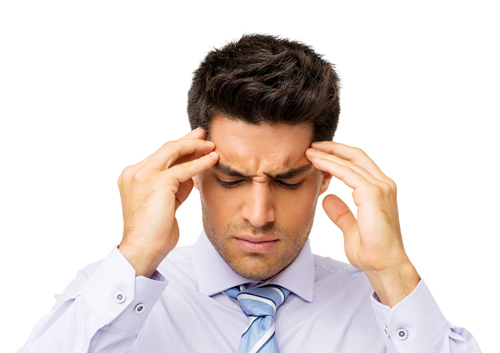
Many people suffer through headaches for years without getting to the root cause of their problem. If you find yourself constantly popping painkillers to get through the day, it might be worth a trip to see a medical professional – but it may not be the person you think.
Talking to Dr. Brad Hartjes and Dr. Joel Hartjes can be a great start when dealing with chronic headaches, because dental issues frequently contribute to head pain. In fact, the American Academy of Craniofacial Pain estimates that 80% of headaches are caused by muscle tension, which often originates in the jaws.
What Do Tension Headaches Feel Like?
A tension headache can originate on one side of your head or can pervade your entire skull. Typically, tension headaches feel like a dull, throbbing ache inside your head. Some patients at our Middleton, WI office report that they feel as though a metal band has been wrapped around their head and is causing significant pressure. Several common symptoms suggest that tension headaches may be caused by dental issues:
- Feeling as though your head or scalp is painful to the merest touch
- Experiencing a dull or throbbing pain behind the eyes
- Clicking or popping sounds in your jaw joints
- Grinding teeth or clenching the jaws, particularly in times of anxiety or during the night
- Feeling as though your jaw muscles are sore when you wake up from sleep
Dental Origins of Headaches
Several dozen muscles control your facial expressions, jaw movements, and motions such as swallowing. When these muscles are contracted for long periods of time, tension builds up within the muscle and can lead to headaches. This may happen if you clench or grind your teeth at night, your bite is misaligned, or you have muscle imbalances in the jaw or neck.
Dental Treatments for Tension Headaches
Fortunately, a trip to Hartjes Dental Associates can be a fruitful way to alleviate your headaches, including the following treatments:
- Bite. In many cases, correcting your bite through orthodontics releases the stress on your jaw and muscles, and reduces the frequency of headaches.
- Nightguard. A nightguard, which resembles a sports mouthguard, may also be helpful if you frequently grind your teeth or clench your jaws during sleep. Nightguards distribute the tension from your clenched jaws and reduce the possibility of dental damage.
- Physical therapy and relaxation. Correcting the posture of your shoulders, neck, and head may alleviate muscle tension associated with headaches.
