Our Blog

Invisalign Teen® Treatment Benefits

December 11th, 2019

Many teens want straighter teeth but dread a mouth full of metal. Because of that, Invisalign Teen treatment has become a popular choice among teens. It produces great results without the hassle of traditional braces.

If you’re like most teens at our Middleton, WI office, you love hanging out with your friends, and you don’t want to look different or have to watch what you eat. If you’re unsure about the benefits of Invisalign Teen clear aligners, we’re here to explain some of the perks.

You can eat what your friends eat

Invisalign Teen aligners can be removed easily for meals and snacks, so you can eat just like you normally would. You don’t need to worry about food getting stuck in your braces or a bracket popping off. Unlike with braces, you can enjoy the following foods with your friends during Invisalign Teen straightening treatment:

  • Popcorn at the movies
  • Trail mix with dried fruit ribs and chicken wings
  • A peanut butter sandwich, apples, and carrot sticks

You can take care of your teeth more easily

Since Invisalign Teen aligners are removable, you won’t have to worry about finding tooth decay once your braces are removed. You can brush and floss your teeth as you normally would, just by taking the trays out of your mouth.

People won’t know you’re wearing them

We’ve saved the best for last: Invisalign Teen aligners are nearly invisible. Chances are, the only people who will know you’re getting your teeth straightened are the people you tell yourself!

Getting straighter teeth can be a massive confidence-booster in the long run. With Invisalign Teen clear aligners, the treatment isn’t that bad! Learn more at our Middleton, WI office.
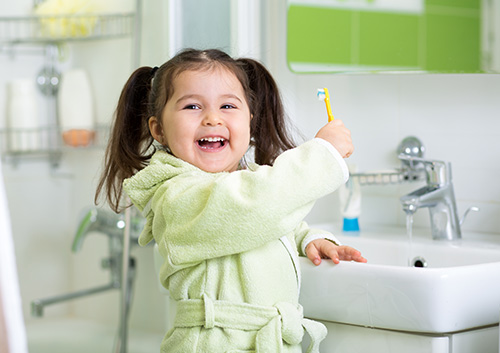

Brushing Your Toddler’s Teeth

December 5th, 2019

At Hartjes Dental Associates, we know that brushing your toddler’s teeth can be an intimidating prospect. So we’re providing a few tips in the hope of making the process a lot more easy, effective, and all-around enjoyable for everyone!

Start by getting into a position that gives you control and enables you to see well into your child’s mouth. If you can see clearly, you will be able to maneuver the toothbrush better around your son or daughter’s mouth for a better quality of brushing.

It’s important to choose a time when your toddler is calm. Have your little one sit with his or her favorite stuffed animal, or play a fun movie in the background so your child can focus on something comforting while you’re brushing.

Using a circular motion, brush all sides of their teeth. Be sure to let your toddler have a turn after you’re done, to start getting used to it. This way, he or she is more likely to repeat the brushing and flossing exercise when your youngster is old enough.

Dr. Brad Hartjes and Dr. Joel Hartjes and our team agree that brushing and flossing need to be performed with kindness and care. To ensure your child learns good dental hygiene habits early on, be gentle and make this time a happy, learning time.

Your child should also have regular appointments at our Middleton, WI office for checkups and cleanings to keep on track!

What is Remineralization?

December 4th, 2019

“What is the strongest substance in the body?” If this question comes up on trivia night, be prepared to impress your team when you confidently answer, “Tooth enamel!”

Tooth enamel? The reason for this surprising answer lies in the biology of our teeth. Minerals make up well over 90% of our enamel, a much higher percentage than is found anywhere else in the body, including our bones. But unlike bone tissue, which can heal and regenerate, tooth enamel cannot. Even though it is extremely strong, enamel can be damaged by a process called demineralization.

Demineralization

Demineralization is a result of acids at work in our mouths. Acids actually break down the minerals in our enamel, making the enamel softer. Over time, bacteria attack deeper into the tooth, eventually leading to decay. Acidic foods like sodas, citrus, pickles, and coffee are obvious culprits in providing an acidic environment, but there are other problem foods as well. We all have bacteria in our mouths, which can be helpful or harmful. The bacteria in plaque use the sugars and starches we eat to produce even more acids.

This process is something that takes place very quickly. In fact, even brushing too soon after eating something acidic can damage the demineralized surface of a tooth. Waiting at least 20 to 30 minutes to brush gives our bodies a chance to restore the enamel surface in a process called remineralization.

Remineralization

Our bodies are actually designed to help protect our enamel, and the most important part of this process is saliva production. Saliva cleanses our teeth and reduces levels of acidity. And our saliva constantly washes important minerals over our teeth. Calcium and phosphate ions rebuild and strengthen molecules where demineralization has taken place. This process is called remineralization.

We have other ways to help the remineralization process along. Fluoride toothpastes and fluoridated water speed up the movement of mineral building blocks back to the surface of the tooth. Fluoride also strengthens our teeth so that they resist acids and demineralization better than teeth without fluoride, making them less vulnerable to cavities.

New products are available for home and professional use that are designed to increase remineralization—talk to Dr. Brad Hartjes and Dr. Joel Hartjes at our Middleton, WI office if you would like the latest recommendations. In fact, talk to us about tooth-friendly menus, the best toothpastes, brushing techniques, and all the ways to keep your enamel its healthiest. You’ll be answering all those trivia questions with a strong, confident smile!

How do I prevent oral cancer?

November 28th, 2019

The fact is, according to the Oral Cancer Foundation, close to 40,000 Americans will be diagnosed with oral or pharyngeal cancer this year, resulting in more than 8,000 deaths. Men face twice the risk of developing oral cancer as women, and men who are over age 50 face the greatest risk. The American Cancer Society recommends an oral cancer screening exam every three years for people over the age of 20 and annually for those over age 40. The five-year survival rate is only 50 percent, and oral cancer, which is the sixth-most common diagnosed form of the disease, is one of the few cancers whose survival rate has not improved. Today, Dr. Brad Hartjes and Dr. Joel Hartjes and our team would like to take this opportunity to remind all of our patients about the importance of maintaining good oral hygiene to prevent the disease.

So, what can you do at home to take an active role in preventing oral cancer?

The American Cancer Society recommends an oral cancer screening exam every three years for people over the age of 20 and annually for those over age 40. In addition, we encourage you to:

  1. Conduct a self-exam regularly. Using a bright light and a mirror, look at and feel your lips and gums. Try tilting your head back to look at and feel the roof of your mouth, and pull your cheeks out to look inside of your mouth, the lining of your cheeks, and your back gums. Pull out your tongue and look at all surfaces. Feel for lumps or enlarged lymph nodes in both sides of your neck and under your lower jaw. Please give us a call immediately if you notice any changes in the appearance of your mouth or any of the signs and symptoms mentioned above.
  2. Don’t smoke or use any tobacco products and drink alcohol in moderation.
  3. Eat a well-balanced diet. This includes eating a wide variety of foods from the five primary food groups on a daily basis to meet the recommended amounts of vitamins, minerals, carbohydrates, proteins, and fats you need in a given day.
  4. Limit your exposure to the sun. Repeated exposure increases the risk of cancer on the lips, especially the lower lip. When out in the sun, be sure to use UV-A/B-blocking sun protective lotions on your skin as well as your lips.

Please let us know if you have any questions about your oral health, either during your next scheduled visit, by giving us a call, or asking us on Facebook.

1001 N Gammon Rd #2
Middleton, WI 53562
(608) 836-5600